
Email Marketing: Then vs Now (2026)
.webp)
Table Of Contents
Just imagine this - you wake up, grab your phone, and there it is-a personalized message from your favorite brand sitting right in your inbox. That's the magic we're talking about today.
Email marketing remains one of the most powerful tools in a marketer's arsenal, even as we navigate through 2026. It's not just about sending messages anymore; it's about creating meaningful conversations that drive real business results.
Email Marketing: Then vs Now (At a Glance)
.webp) Then:
Then:
Batch emails, generic messaging, manual lists, one-size-fits-all campaigns
Now (2026):
AI-driven personalization, automation, behavior-based journeys, data-led optimization
The Role of Email Marketing in Digital Marketing
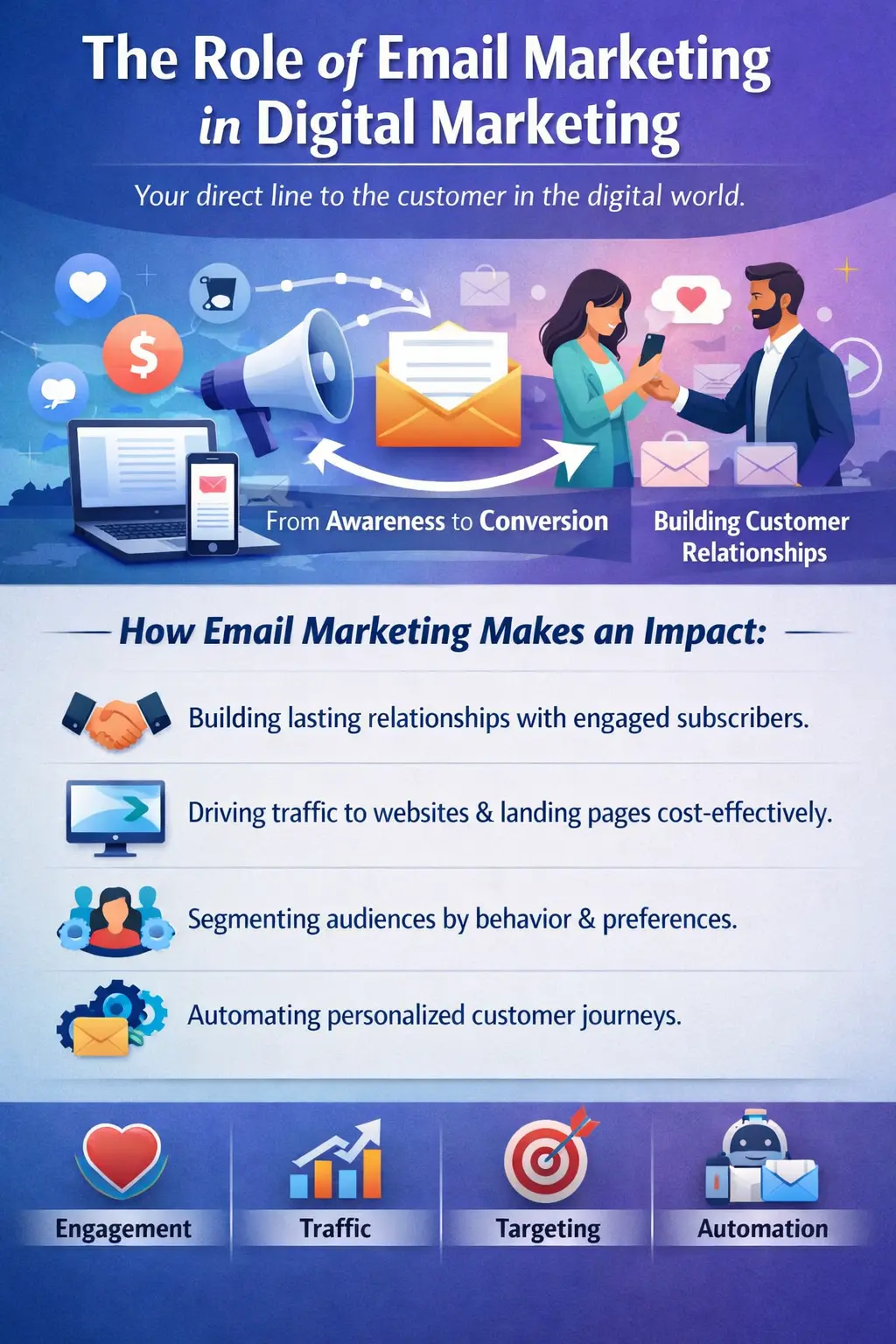
Think of email as your direct line to customers. Unlike social media, where your content might get lost in endless feeds, emails land directly where people check multiple times daily.
In today's landscape, this channel serves as the backbone of customer relationships. It bridges the gap between brand awareness and conversion, nurturing leads through personalized journeys that feel less like marketing and more like genuine communication.
Here’s how businesses use email effectively today:
- Building lasting relationships with subscribers who've actually raised their hands to hear from you
- Driving consistent traffic to websites and landing pages without burning through ad budgets
- Segmenting audiences based on behavior, preferences, and purchase history for laser-focused messaging
- Automating customer journeys that feel personal even when they're running on autopilot
Owned Communication Without Algorithm Dependence
In today’s mobile-first world, email gives you a direct connection with customers without relying on ever-changing platform algorithms.
Guiding Subscribers from Awareness to Action
Well-structured email sequences naturally move subscribers from curiosity to confident purchase decisions.
Benefits of Email Marketing in Digital Marketing
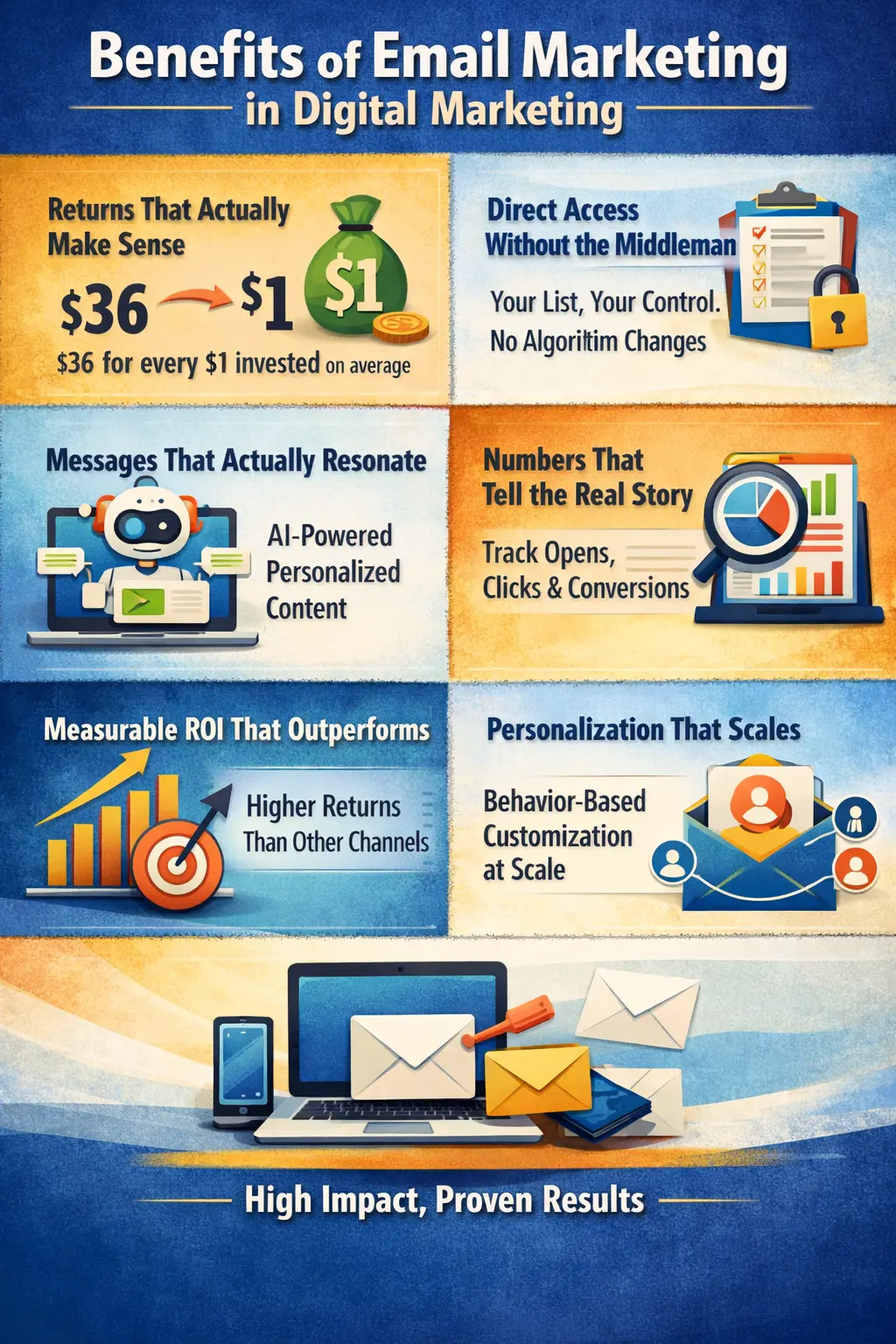
Returns That Actually Make Sense
Industry benchmarks often cite returns of roughly $36 for every dollar invested, though results vary by strategy and industry. Compared to most advertising channels, inbox performance continues to stand out.
Direct Access Without the Middleman
You own your list. Platform changes won’t suddenly reduce your reach overnight. Your subscribers are yours to communicate with, regardless of what Big Tech decides tomorrow.
Messages That Actually Resonate
Advanced AI tools now let you tailor content to individual preferences without manually writing thousands of variations. Dynamic content blocks adjust based on recipient data, making each message feel crafted specifically for that person.
Numbers That Tell the Real Story
Open rates, click-throughs, and conversions are trackable down to the smallest interaction, making optimization data-driven rather than guesswork.
Measurable ROI That Outperforms Other Channels
Targeted campaigns consistently deliver measurable results and often outperform other digital channels.
Personalization That Scales Without Losing Relevance
Behavior-driven personalization ensures emails feel handcrafted, even at scale.
Advantages of Email Marketing in Digital Marketing
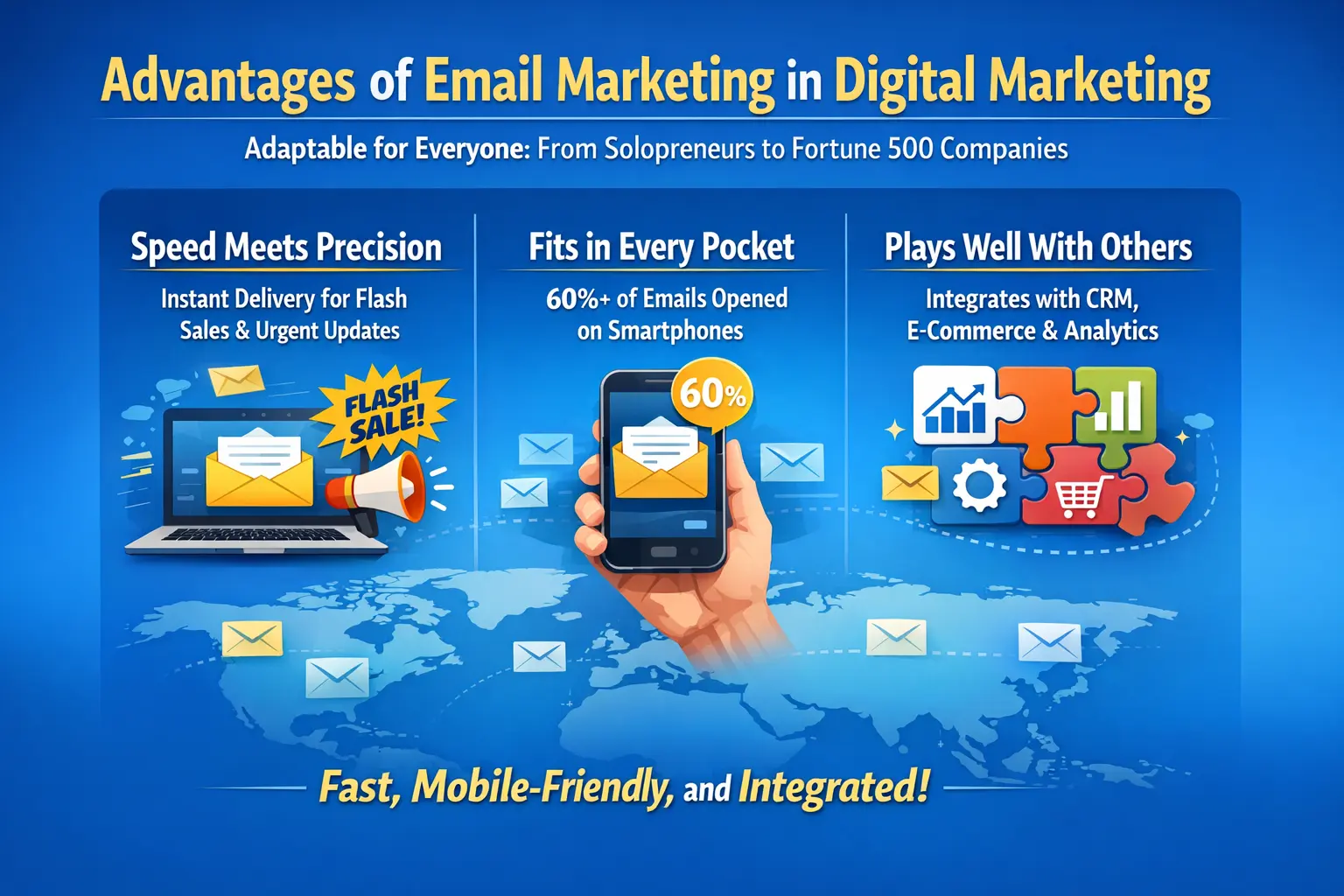
The beauty lies in its versatility and accessibility. Whether you're a solopreneur testing your first product or running a Fortune 500 company, this channel adapts to your needs and budget.
What sets this approach apart from other digital channels?
- Speed Meets Precision: Messages arrive within seconds across thousands of inboxes, ideal for flash sales and urgent updates.
- Fits in Every Pocket: With over 60% of emails opened on smartphones, responsive design ensures consistent experiences across devices.
- Plays Well With Others: Modern platforms integrate seamlessly with CRMs, e-commerce systems, and analytics tools for smarter campaigns.
Instant Reach with Precision Targeting
Emails deliver timely, targeted messages across devices without wasting budget.
Integrated Campaigns Powered by Connected Data
Email works alongside CRM, e-commerce, and analytics tools to create unified marketing strategies.
Types of Email Marketing in Digital Marketing
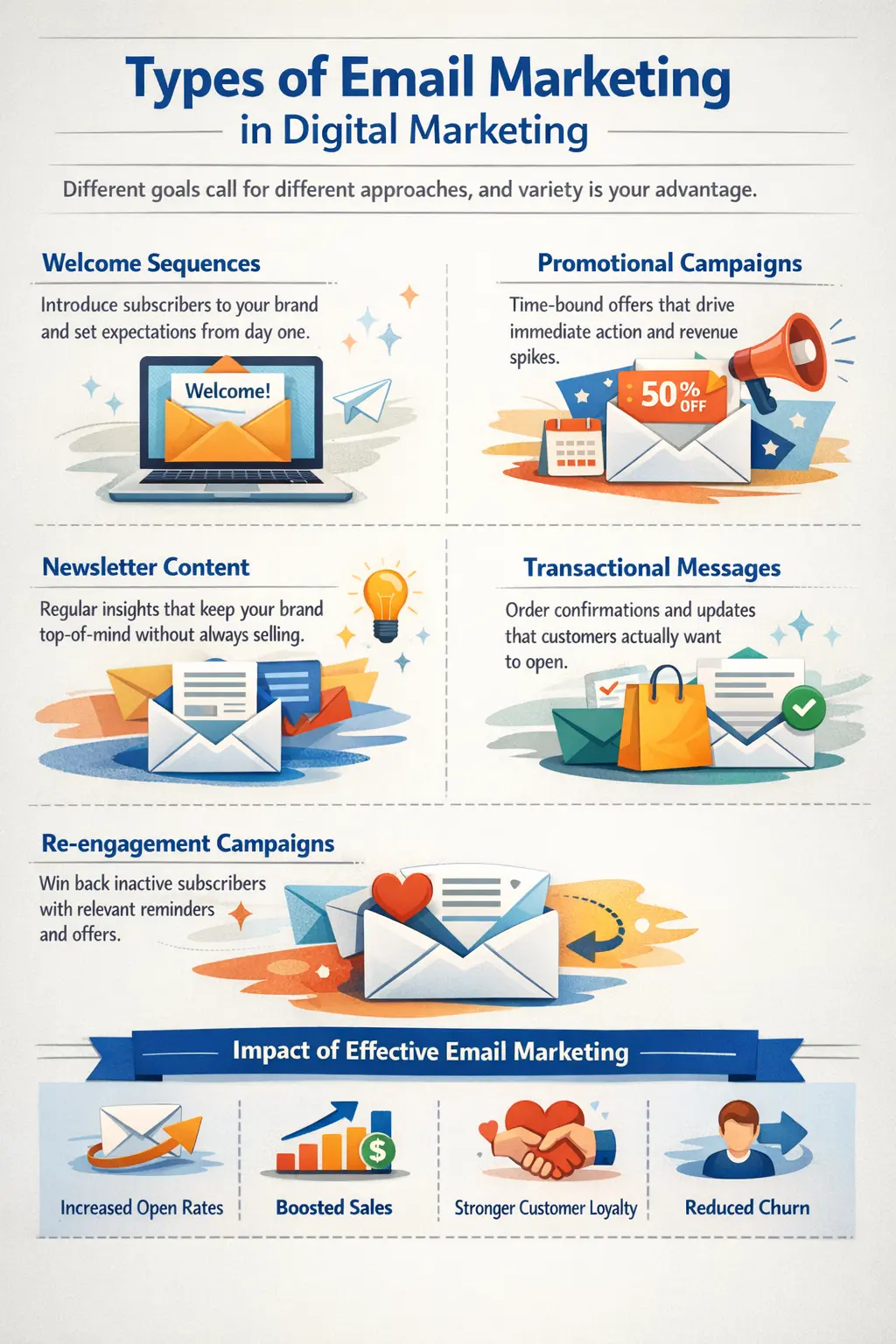
Different goals call for different approaches, and variety is your advantage.
- Welcome Sequences: Introduce subscribers to your brand and set expectations from day one.
- Promotional Campaigns: Time-bound offers that drive immediate action and revenue spikes.
- Newsletter Content: Regular insights that keep your brand top-of-mind without always selling.
- Transactional Messages: Order confirmations and updates that customers actually want to open.
- Re-engagement Campaigns: Win back inactive subscribers with relevant reminders and offers.
Revenue-Focused Campaigns That Drive Action
Promotional emails create urgency and convert attention into sales.
Long-Term Engagement Through Relationship Building
Newsletters and lifecycle emails nurture loyalty one message at a time.
Opt-In Email Marketing in Digital Marketing
Let’s talk about the foundation that makes everything else possible: permission.
Permission-based communication isn’t just best practice; it’s required by regulations like GDPR and CAN-SPAM. More importantly, it ensures you're reaching people who genuinely want to hear from you.
Double opt-in processes may add friction, but they result in cleaner lists and stronger engagement over time.
Smart marketers clearly communicate value at signup-exclusive offers, educational content, or early access-making expectations transparent from the start.
Why Permission-Based Marketing Protects Trust
Opt-in ensures relevance, compliance, and long-term subscriber trust.
Maintaining Clean, Engaged Subscriber Lists
Double opt-in, clear value propositions, and honest messaging help sustain high engagement.
Wrap-up
Email marketing is here to stay, continuously evolving to engage audiences more intelligently. As we’ve explored, this channel offers strong ROI, direct customer access, and flexibility that adapts to any business size.
The real advantage comes from combining permission-based strategies with personalization that respects your audience’s time. Most brands don’t need complex automation to start—just clear value and consistent communication. Build those connections, and your subscriber list becomes one of your most valuable business assets.
FAQs
1. Is email marketing still effective in 2026?
Yes. Email marketing remains one of the highest-ROI digital channels, offering direct reach, personalization, and measurable results that outperform many paid platforms.
2. What is the biggest difference between old and modern email marketing?
Earlier campaigns were generic and manual, while modern email marketing uses AI, automation, and behavior-based data to deliver highly personalized customer journeys.
3. How does email marketing fit into digital marketing today?
Email acts as a direct communication channel that nurtures leads, builds relationships, and guides users from awareness to conversion without algorithm dependency.
4. Why is email marketing better than social media for conversions?
Unlike social platforms, emails reach subscribers directly, avoid algorithm limitations, and consistently drive higher engagement and conversion rates.
5. What types of email campaigns work best in 2026?
Welcome emails, promotional campaigns, newsletters, transactional updates, and re-engagement sequences perform best when aligned with user behavior and intent.
6. Is opt-in email marketing mandatory?
Yes. Opt-in email marketing ensures compliance with laws like GDPR, builds trust, improves deliverability, and reaches users who genuinely want your content.
7. Can small businesses benefit from email marketing?
Absolutely. Email marketing is cost-effective, scalable, and adaptable, making it ideal for small businesses aiming for consistent traffic and long-term customer relationships.
8. How does AI improve email marketing performance?
AI enables smarter segmentation, predictive personalization, automated journeys, and data-driven optimization, making campaigns more relevant without increasing manual workload.
Tags: Email marketing, Email marketing in 2026, Email marketing strategy, Digital email marketing, Benefits of email marketing, Types of email marketing, Email marketing examples, Best email marketing in 2026.