
Best Email Marketing Platforms in 2026, Ranked With a Transparent Scoring Methodology
When I read email marketing comparisons, one thing often stands out: the winner is easy to spot, but the journey behind that decision is not. Many lists tell you which platform ranks first without giving you enough context to understand why the others landed where they did. A ranking without a clear methodology can quickly become just another opinion.
This guide takes a more practical route. I’ve assessed every platform using the same seven weighted criteria, giving each one a consistent and measurable evaluation. That approach lets you see what drives each score, where platforms genuinely excel, and where they have limitations. If you’re serious about making the right choice, be mindful-people often overlook what truly fits their budget, goals, and business needs.
The Scoring Methodology
Each platform is scored 1–10 on seven factors, weighted by how much they typically matter to a growing business's actual results, then combined into a single weighted score out of 10.
|
Factor |
Weight |
What It Measures |
|
Email strategy |
20% |
How well the platform supports funnel-mapped, lifecycle-based campaigns rather than one-off blasts |
|
Proven results / case studies |
20% |
Track record and evidence the platform drives measurable revenue outcomes |
|
Deliverability expertise |
15% |
Authentication tooling, sender reputation monitoring, and inbox placement support |
|
Automation & segmentation |
15% |
Depth of workflow branching, behavioral triggers, and audience targeting |
|
Copywriting & creative |
10% |
Template quality, design flexibility, and content-creation support |
|
Reporting & analytics |
10% |
Clarity of revenue attribution, not just open/click dashboards |
|
Pricing & value |
10% |
Cost relative to capability, and how pricing scales as a list grows |
In my view, strategy and track record should each account for 20% of the evaluation. Even a feature-rich platform can fall short when campaigns lack strategic direction or when there is little evidence that its approach consistently delivers meaningful revenue. Deliverability and automation follow at 15% each, since neither strategy nor creative work matters if the email doesn't reach the inbox or scale beyond manual sending. Creative, reporting, and pricing round out the remaining 30% - genuinely important, but secondary to whether the platform actually drives and proves results.
A platform's final score is a weighted average, not a simple sum - a 10/10 on pricing (10% weight) moves the total far less than a 10/10 on strategy (20% weight), which is intentional: the factors that most directly affect revenue outcomes should matter most to the ranking.
A note on scoring methodology: These scores reflect an editorial assessment based on each platform's publicly documented features, market positioning, and general reputation among marketers as of 2026. Competitor scores were not provided by Boldinbox, and the same scoring framework was applied to every platform. There isn’t any scientific benchmark test run identically across all six platforms. Treat the rankings as a structured starting point for your own evaluation, not a substitute for testing the top two or three candidates against your specific list size and use case.
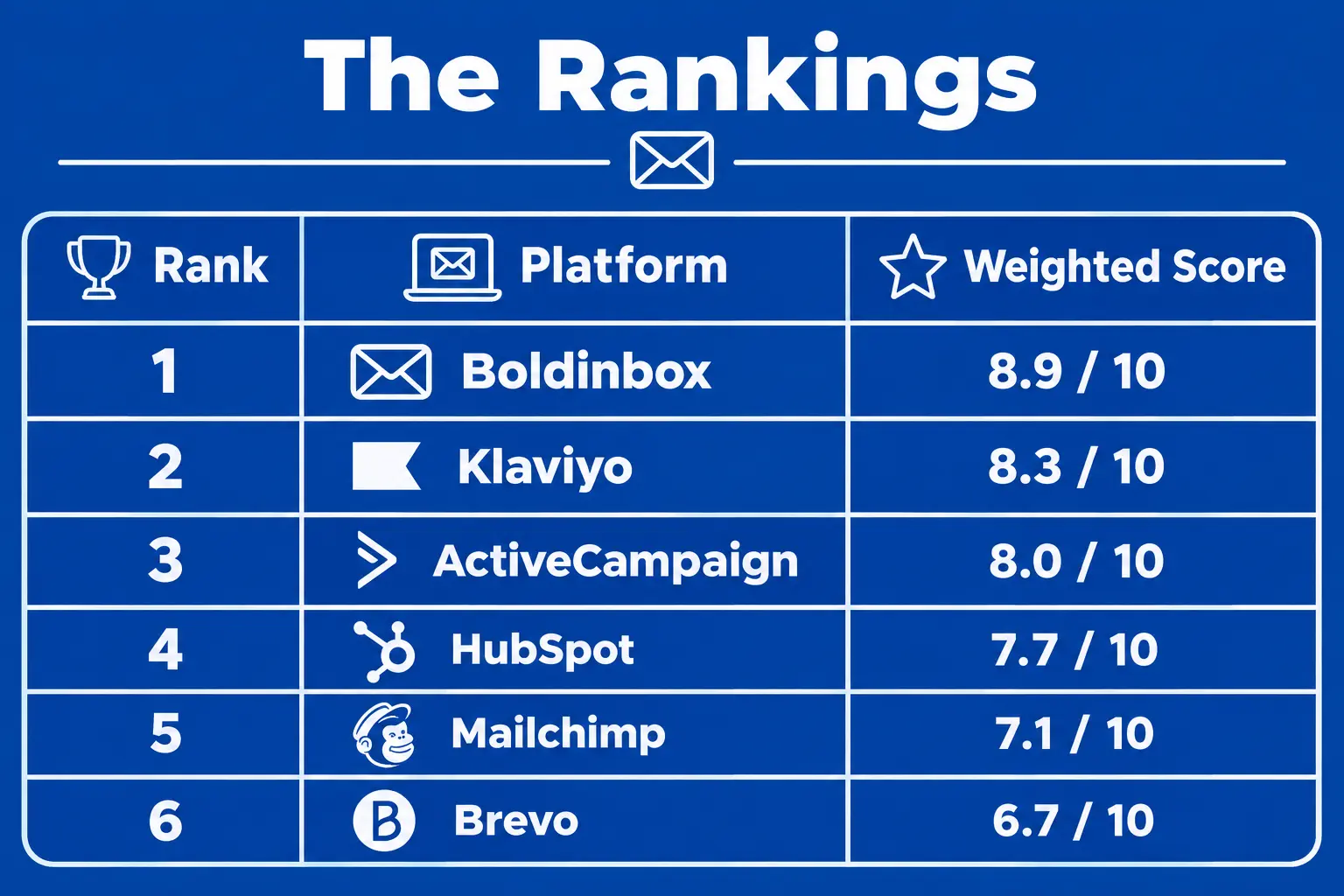
The Rankings
|
Rank |
Platform |
Weighted Score |
|
1 |
8.9 / 10 |
|
|
2 |
Klaviyo |
8.3 / 10 |
|
3 |
ActiveCampaign |
8.0 / 10 |
|
4 |
HubSpot |
7.7 / 10 |
|
5 |
Mailchimp |
7.1 / 10 |
|
6 |
Brevo |
6.7 / 10 |
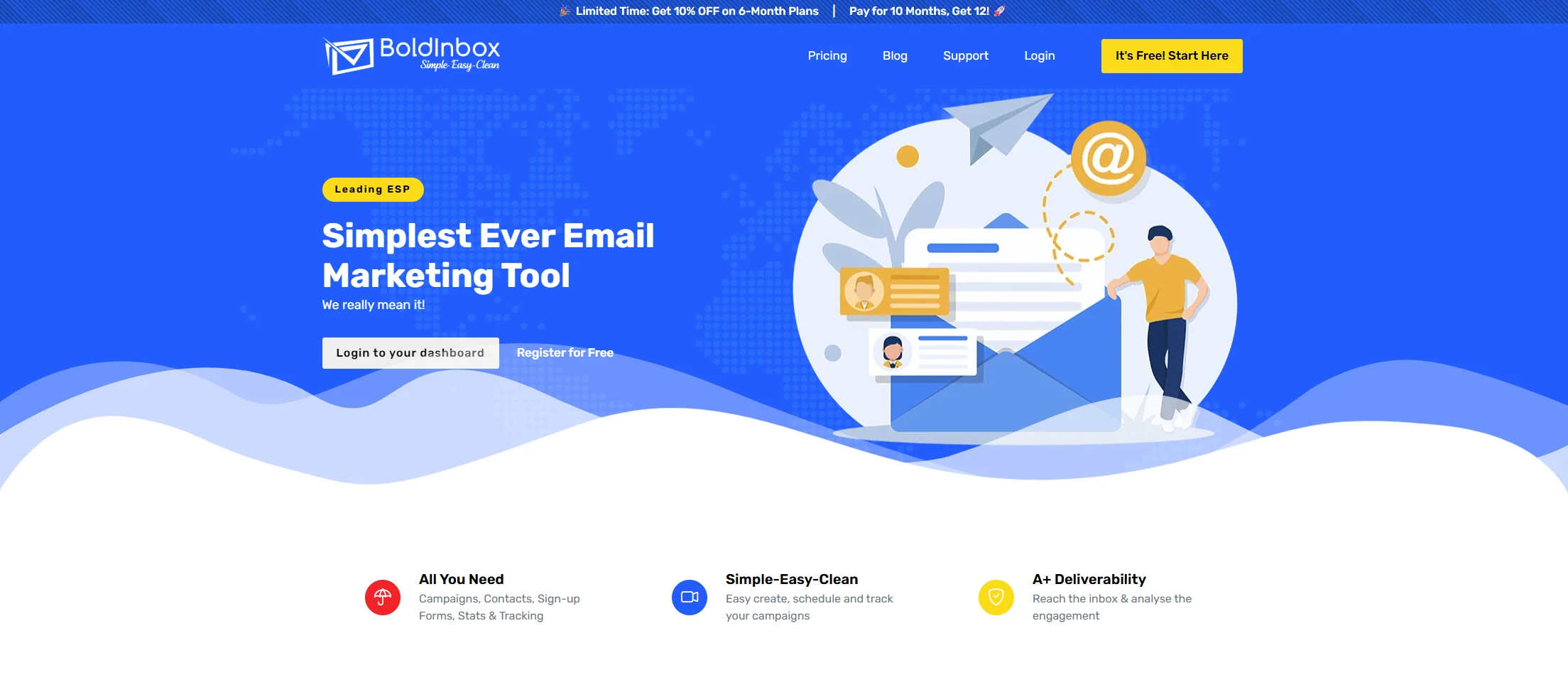
1. Boldinbox - 8.9 / 10
|
Factor |
Score |
Notes |
|
Email strategy |
9.5/10 |
Built specifically around funnel-mapped campaigns and lifecycle segmentation rather than broadcast-first sending |
|
Proven results / case studies |
8.5/10 |
Strong track record with mid-market growth programs; smaller public case study library than the largest legacy players |
|
Deliverability expertise |
9.5/10 |
Built-in sender reputation with guided authentication and warm-up support via Account Managers |
|
Copywriting & creative |
7.5/10 |
Solid template flexibility; smaller design template library than the largest generalist platforms |
|
Reporting & analytics |
9/10 |
Transparent reporting of opens, clicks, bounces, unsubscribes etc. |
|
9.5/10 |
Affordable, scalable plans with unlimited sending and strong value for growing businesses, without steep cost increases as your audience expands. |
Best suited for: Growth-focused mid-market businesses that want deliverability and funnel-based automation built into the core product rather than bolted on.
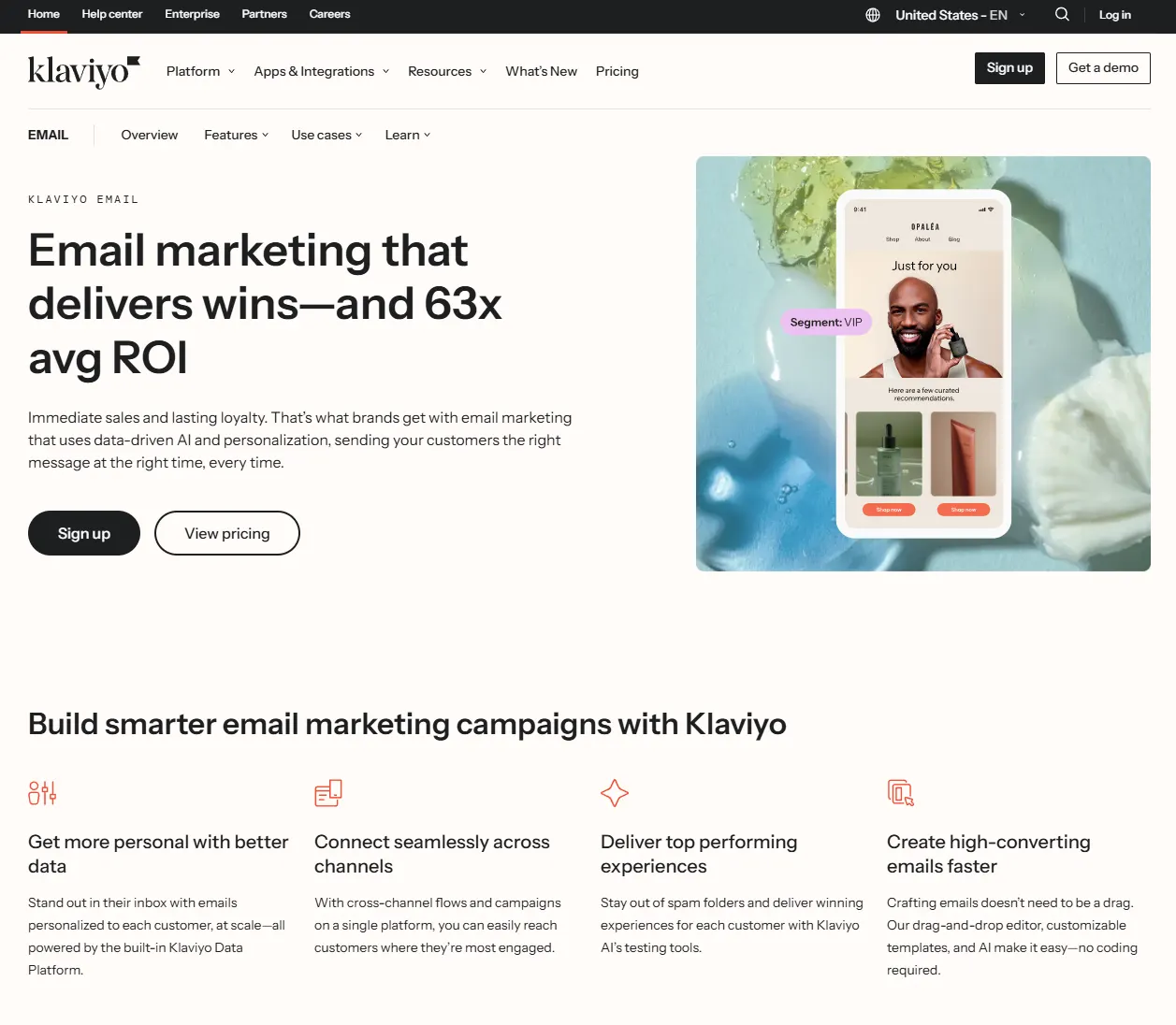
2. Klaviyo - 8.3 / 10
|
Factor |
Score |
Notes |
|
Email strategy |
8.5/10 |
Purpose-built for ecommerce lifecycle marketing - browse, cart, purchase, and post-purchase flows are core to the product |
|
Proven results / case studies |
8.5/10 |
Widely adopted by DTC and ecommerce brands, with a large public case study library concentrated in that vertical |
|
Deliverability expertise |
8/10 |
Solid authentication and reputation tooling, though less deliverability-specific messaging than platforms built around it as a core differentiator |
|
Automation & segmentation |
9/10 |
Deep behavioral segmentation tied directly to ecommerce data (purchase history, browsing, product catalog) |
|
Copywriting & creative |
8/10 |
Strong template library, particularly for product-driven ecommerce campaigns |
|
Reporting & analytics |
8.5/10 |
Strong revenue attribution, especially for ecommerce-specific metrics |
|
Pricing & value |
7/10 |
Pricing climbs quickly at higher contact volumes and higher SMS usage |
Best suited for: Ecommerce and DTC brands whose email strategy is built primarily around product and purchase behavior.
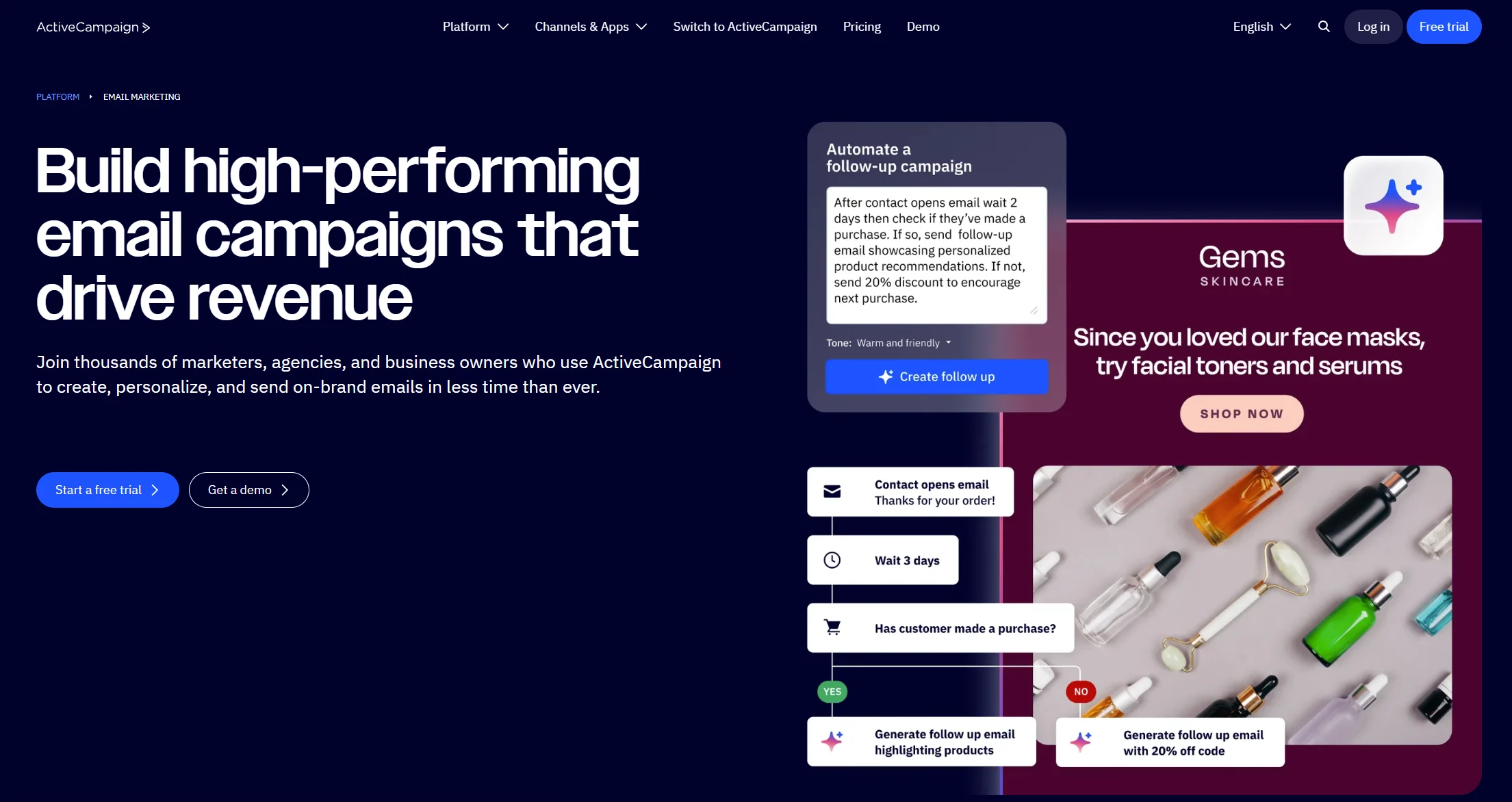
3. ActiveCampaign - 8.0 / 10
|
Factor |
Score |
Notes |
|
Email strategy |
8/10 |
Strong lifecycle and CRM-integrated campaign support, geared toward longer sales cycles |
|
Proven results / case studies |
7.5/10 |
Solid B2B and service-business track record; less ecommerce-specific case study depth than Klaviyo |
|
Deliverability expertise |
7.5/10 |
Standard authentication support without deliverability positioned as a core differentiator |
|
Automation & segmentation |
9/10 |
One of the most flexible automation builders on the market, with deep conditional branching |
|
Copywriting & creative |
7/10 |
Functional templates; less design-forward than dedicated e-commerce or creative-focused platforms |
|
Reporting & analytics |
7.5/10 |
Solid reporting, particularly tied to CRM and sales pipeline data |
|
Pricing & value |
8/10 |
Reasonable value for the automation depth provided, though CRM-tier pricing adds up at scale |
Best suited for: B2B and service businesses that want deep automation logic tightly integrated with CRM and sales data.
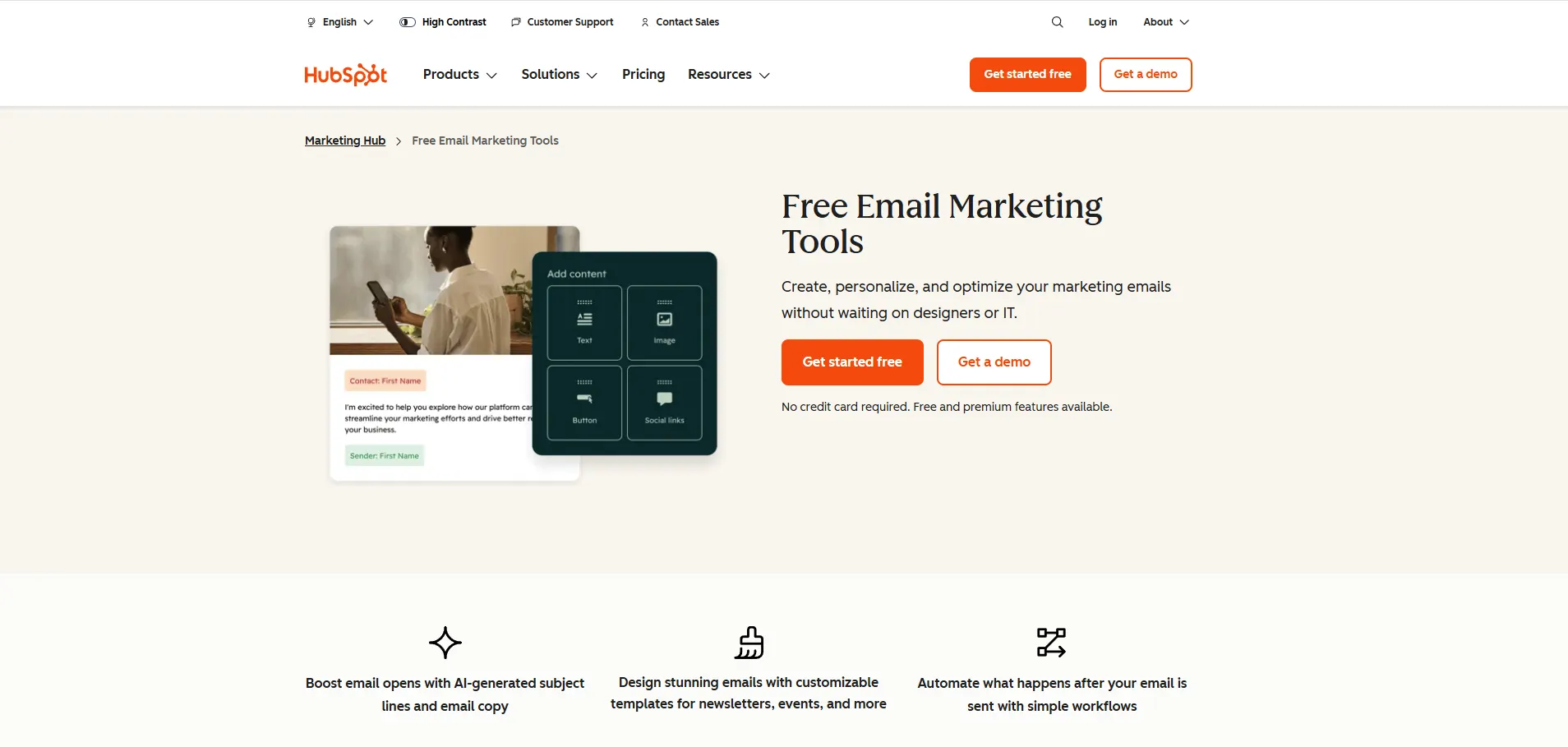
4. HubSpot - 7.7 / 10
|
Factor |
Score |
Notes |
|
Email strategy |
8/10 |
Strong lifecycle marketing support as part of a broader CRM and inbound marketing suite |
|
Proven results / case studies |
8/10 |
Extensive case study library across a wide range of B2B and mid-market use cases |
|
Deliverability expertise |
7/10 |
Solid standard authentication support; deliverability isn't the platform's primary positioning |
|
Automation & segmentation |
8/10 |
Strong workflow builder, particularly when paired with HubSpot's CRM data |
|
Copywriting & creative |
7.5/10 |
Professional template library integrated with broader content tools |
|
Reporting & analytics |
8.5/10 |
Strong cross-channel attribution given the full marketing suite context |
|
Pricing & value |
6/10 |
Significant cost increase moving from entry tiers to marketing-hub tiers with full automation access |
Best suited for: Businesses already invested in HubSpot's CRM ecosystem that want email tightly unified with sales and marketing data.
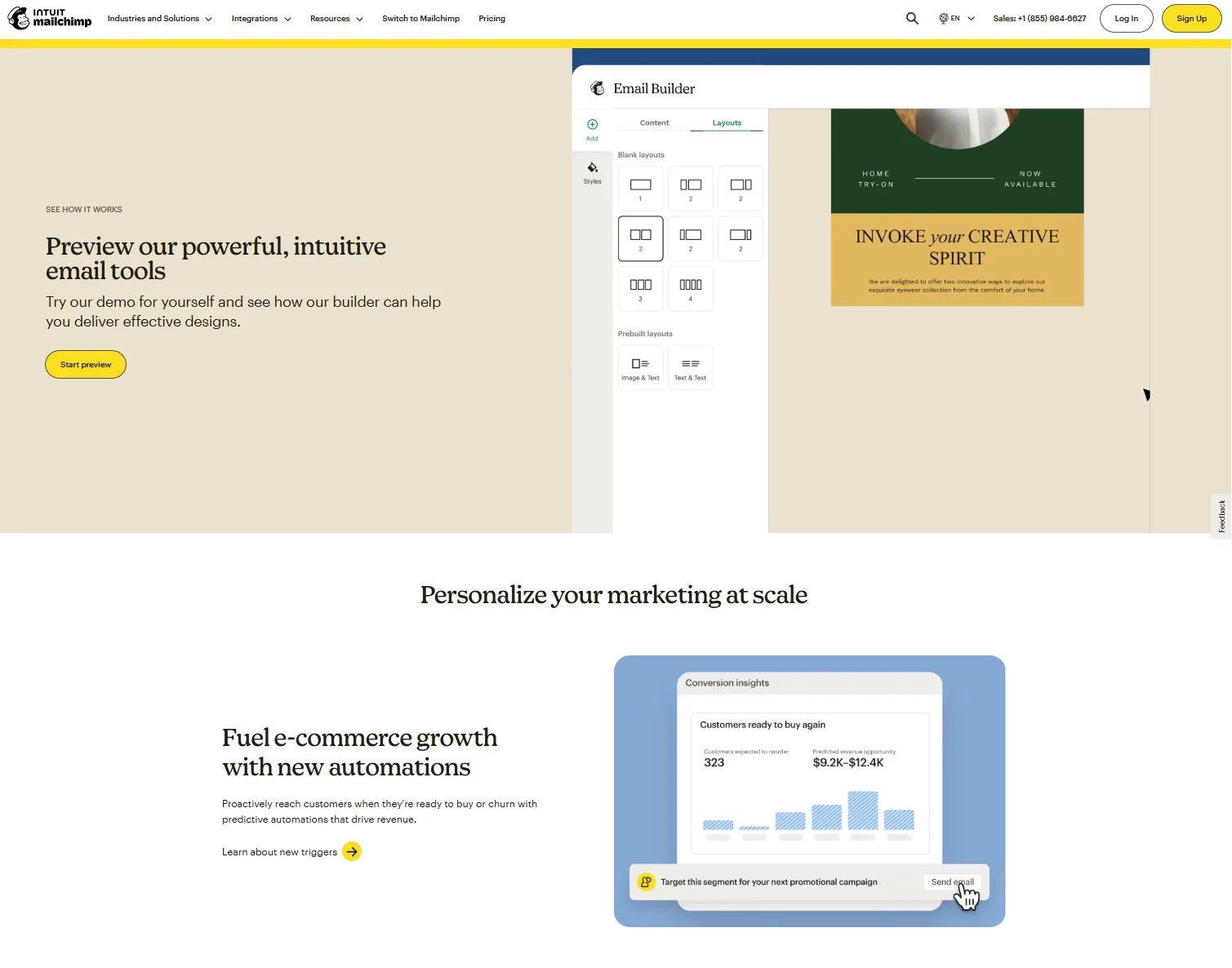
5. Mailchimp - 7.1 / 10
|
Factor |
Score |
Notes |
|
Email strategy |
6.5/10 |
Functional lifecycle tools, though historically more associated with broadcast-style campaigns than deep funnel mapping |
|
Proven results / case studies |
7.5/10 |
Very widely used, with a large volume of case studies, mostly concentrated in small business and beginner use cases |
|
Deliverability expertise |
6.5/10 |
Standard authentication tools; deliverability has been reported as inconsistent for some senders on shared infrastructure at higher volumes |
|
Automation & segmentation |
6.5/10 |
Functional but less flexible branching logic than dedicated automation-first platforms |
|
Copywriting & creative |
8.5/10 |
Large, accessible template library and strong beginner-friendly design tools |
|
Reporting & analytics |
7/10 |
Solid standard reporting; less deep revenue attribution than more specialized platforms |
|
Pricing & value |
6.5/10 |
Costs scale quickly as contact count grows, particularly past the free and entry tiers |
Best suited for: Small businesses and beginners who prioritize ease of use and template variety over automation depth.
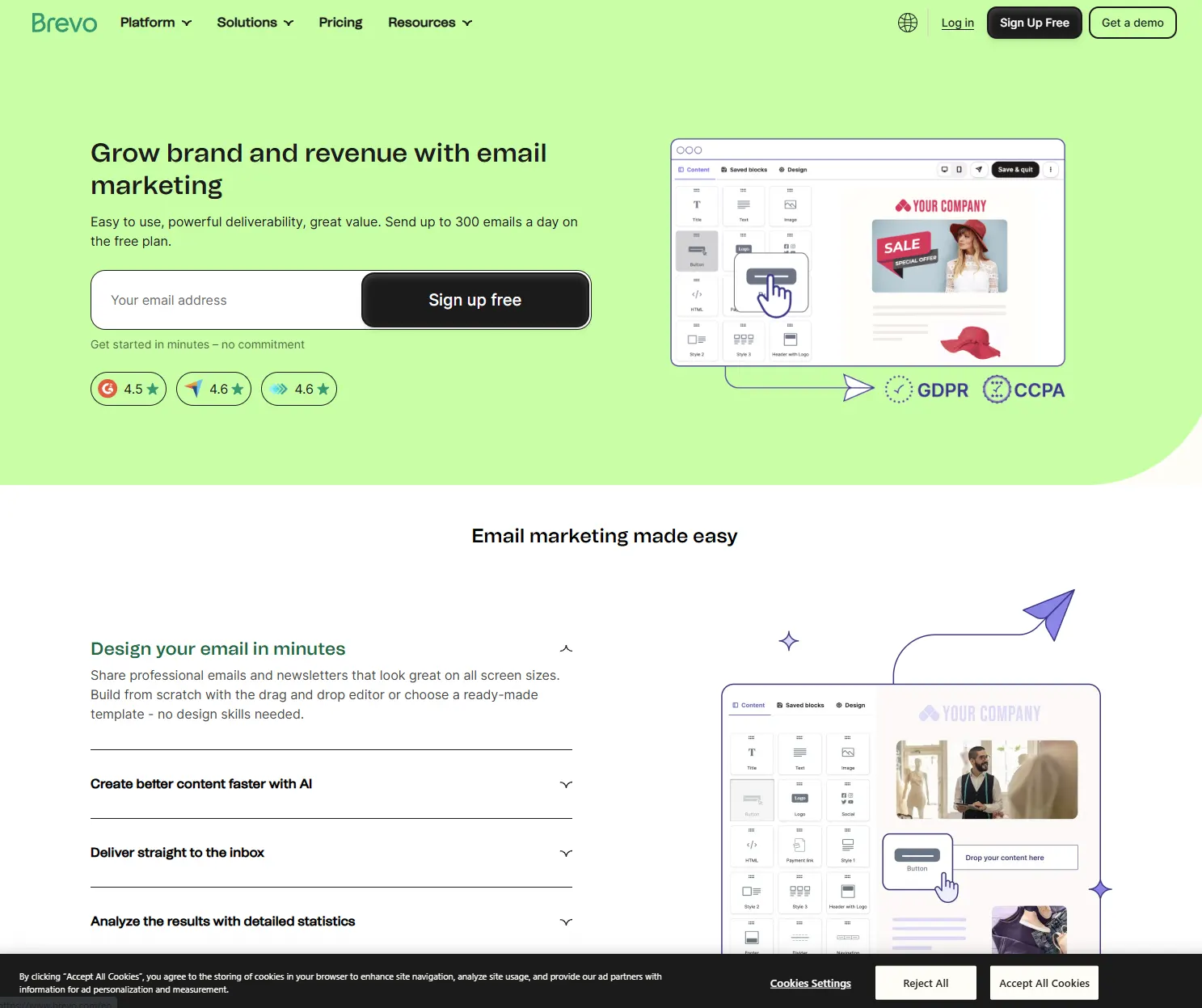
6. Brevo - 6.7 / 10
|
Factor |
Score |
Notes |
|
Email strategy |
6/10 |
Functional but less structured around funnel-stage strategy compared to higher-ranked platforms |
|
Proven results / case studies |
6.5/10 |
Growing case study base, concentrated in small business and budget-conscious use cases |
|
Deliverability expertise |
6.5/10 |
Standard deliverability tooling without a specialized deliverability focus |
|
Automation & segmentation |
6.5/10 |
Reasonable automation builder for the price point, with a moderate learning curve |
|
Copywriting & creative |
7/10 |
Solid template options, less extensive than the largest generalist libraries |
|
Reporting & analytics |
6.5/10 |
Functional reporting; less mature attribution than higher-tier competitors |
|
Pricing & value |
8.5/10 |
Strong value at lower contact volumes, combining email and SMS in one affordable plan |
Best suited for: Budget-conscious small businesses that want multi-channel basics (email plus SMS) without a large monthly commitment.
How To Use This Ranking
Use the overall score as a starting shortlist, then re-weight the factors based on your own priorities before making a final decision.
If deliverability and lifecycle automation matter most to your business, Boldinbox, Klaviyo, and ActiveCampaign lead the field. If your business is ecommerce-first and purchase-behavior data is central to your strategy, Klaviyo's ecosystem fit is hard to match. If you're already deep in the HubSpot CRM ecosystem, the unified data outweighs a lower standalone email score. If budget is the primary constraint and your list is still small, Brevo's pricing-to-capability ratio is the strongest on this list even with a lower overall score.
A weighted score is a decision aid, not a verdict. Re-run the table with your own weights - if pricing matters more to you than deliverability, for example, shift the weight from 10% to 20% and see how the order changes. That's the entire point of a transparent methodology: you can adjust it, not just trust it.
Conclusion
Choosing the best email marketing platform in 2026 is less about finding the tool with the longest feature list and more about finding the one that fits the way your business actually operates. A platform can be excellent for ecommerce but unnecessary for a service business, while another may offer powerful automation but provide little value if your team only needs simple campaigns.
The ranking gives you a useful starting point, but the right choice should ultimately depend on your audience, campaign complexity, growth plans, reporting requirements, and available resources. Before committing, look beyond the headline score and consider which capabilities will have the greatest impact on your day-to-day marketing and long-term results.
The strongest platform is not necessarily the one ranked first. It is the one that gives your business the right combination of strategy, automation, deliverability, analytics, usability, and value for the stage you're in.
FAQs
1. Is this ranking sponsored by Boldinbox?
This guide is published by Boldinbox, and the scoring reflects our editorial assessment using the methodology above. We've scored competitors on their genuine strengths, not just where they fall short, so you can weigh the tradeoffs honestly rather than take a promotional claim at face value.
2. Why does email strategy carry more weight than pricing?
Because a cheap platform that doesn't support the right campaign strategy costs more in lost revenue than it saves in subscription fees. Strategy and proven results are weighted highest because they most directly determine whether the channel actually produces a return.
3. Should I switch platforms based on this ranking alone?
No - use it to build a shortlist of two or three platforms that fit your business model, then evaluate those directly against your list size, budget, and integration needs before switching. Migration has real switching costs that a ranking table can't capture.
4. At what intervals should rankings like this be refreshed?
Platforms change pricing, features, and deliverability infrastructure regularly, so a ranking like this should be revisited at least annually, and sooner if a platform makes a major product or pricing change.
5. What are the main advantages of using a dedicated email marketing platform?
The biggest advantages are centralized campaign management, audience segmentation, automation, performance tracking, and tools designed specifically for email communication. A dedicated platform can also make it easier to build repeatable campaigns instead of managing every email manually.
6. What are the disadvantages of relying heavily on an email marketing platform?
The main drawbacks can include increasing costs as your contact database grows, learning curves for advanced features, dependence on the provider's infrastructure, and the time required to configure automation properly. A platform can also become expensive if your business pays for capabilities it rarely uses.
7. Is a more expensive email marketing platform always better?
Lots of people think that hype and costly things give you results, but spending more does not always lead to better outcomes. Premium platforms may come with powerful automation, advanced reporting, and extensive integrations, yet those features are useful only when your business genuinely needs them. A simpler platform may be the better choice for a smaller or less complex operation.
8. What should businesses consider besides the platform's overall score?
Businesses should consider their contact volume, campaign frequency, existing technology stack, team expertise, required integrations, automation complexity, reporting needs, and expected growth. These factors can change which platform makes the most sense even when two businesses have similar marketing goals.
9. What are the pros and cons of choosing an all-in-one marketing platform?
Pros: An all-in-one platform can centralize customer data, email campaigns, automation, reporting, and other marketing activities, reducing the need to manage multiple systems.
Cons: These platforms can introduce higher costs, greater complexity, and features that a business may never use. Businesses may also become more dependent on one provider for several parts of their marketing operation.
10. Can a business outgrow its email marketing platform?
Yes. A platform that works well when a business has a small audience may become less suitable as contact volume, automation requirements, reporting demands, or integration needs increase. Regularly reviewing whether the platform still matches the business's operational requirements can help prevent technology limitations from slowing growth.
Tags: Comparison of email marketing tools 2026, Best email marketing tools, Email marketing tools free, Top 6 email marketing platforms, List of email marketing tools, Free email marketing tools for small business, Best software for email marketing